


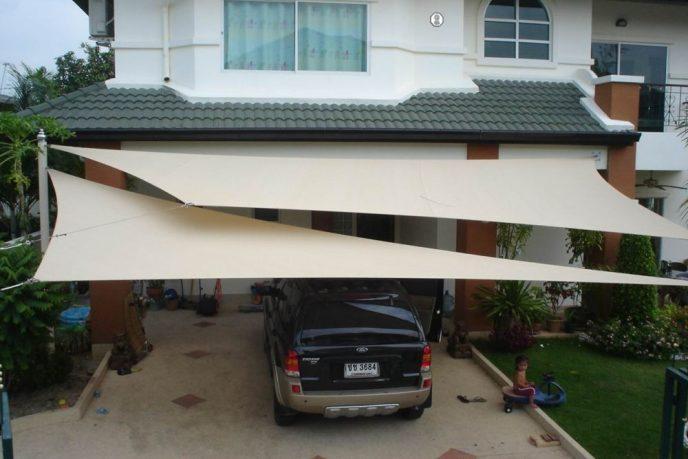
Australian outdoor areas cop harsh summer sun, sudden storms and, in the southern states, cold wet winters. The fabric overhead decides how usable that space stays across all four seasons.
Most shade sails in Australia use one of two materials: breathable HDPE shade cloth or waterproof PVC. Both block UV, but only one keeps you dry. Each brings trade-offs in heat, airflow, structural load and upkeep.
This guide compares both materials side by side. Use it to match your shade sails to your climate, your site and the way you use the space.
Heat and Airflow
HDPE (high-density polyethylene) shade cloth has a knitted weave. Hot air rises through the gaps, so the area below stays cooler and breezes pass straight through.
PVC-coated polyester forms a solid membrane. It traps hot air underneath, which can feel stuffy on still summer days. Allow generous height and open sides so heat can escape.
Rain Protection
PVC sheds rain completely when tensioned with a steep fall. Plan for runoff, because water collects at the low corner. Direct it onto a garden bed or into guttering. Loose or flat PVC pools water, which stretches the fabric and strains fittings.
HDPE resists light drizzle at best. Heavy rain soaks through quickly. Choose it where shade matters more than shelter.
UV Protection
Both materials block strong UV. Quality HDPE blocks roughly 90 to 98 percent, depending on colour and density. PVC blocks close to 100 percent. Darker colours generally block more, so check the rated figure for your chosen shade.
Weight and Structural Load
Wind passes partly through HDPE, which reduces the load on posts and footings. PVC catches the full force of the wind and carries the weight of any rain sitting on it. Expect heavier steel posts, deeper footings and stronger fittings for PVC, plus engineering certification on larger sails.
Size every structure to your wind region. Cyclonic areas in northern Queensland, Western Australia and the Northern Territory demand higher ratings for both fabrics.
Maintenance
- HDPE: Hose off dust and leaves. Check tension each spring. Quality cloth often lasts 10 years or more.
- PVC: Wash with mild soap to prevent mould. Clear debris from the low point and inspect seams yearly. Avoid harsh cleaners that strip the protective coating.
- Both: Use 316 marine-grade stainless fittings near the coast or pools. Remove sails before severe storms where the design allows.
Best Uses by Climate and Setting
- Hot, dry inland areas, Perth and Adelaide: HDPE keeps air moving through long, dry summers.
- Tropical north: HDPE for airflow, with removable sails ahead of cyclone season.
- Melbourne, Hobart and Canberra: PVC over alfresco areas extends outdoor use through wet winters.
- Sydney and Brisbane: Combine both, with PVC over dining areas and HDPE over play spaces.
- Pools, playgrounds and car parks: HDPE for cooler air and lower structural loads.
- Alfresco dining, walkways and barbecue areas: PVC for all-weather cover.
Choose HDPE for cooler air, lighter structures and lower cost. Choose PVC for full rain protection, and engineer the frame to carry the extra load. Mix both across larger outdoor areas. Start by listing how you use each space in summer and winter, then confirm your wind region before you build.