


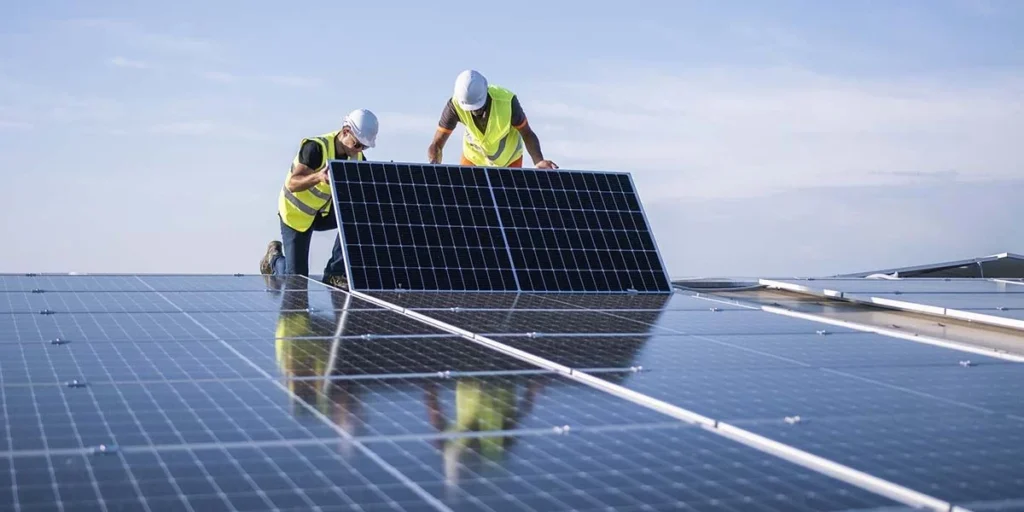
Electricity is one of the largest running costs for businesses in Thailand. Hotels, restaurants, factories, and retail spaces all rely on steady power to keep operations moving. In a coastal town like Hua Hin, where air conditioning runs almost year-round, those bills climb fast. This is why more owners are turning to solar in Hua Hin as a practical way to take control of their energy spending.
Thailand sits in one of the sunniest regions in Southeast Asia. Hua Hin receives strong sunlight for most of the year, which makes it well suited to rooftop solar systems. Businesses that install solar in Hua Hin can generate a large share of their own daytime electricity, reducing how much they draw from the grid. Since commercial demand peaks during daylight hours, the timing lines up neatly with when solar panels produce the most power.
The financial case is straightforward. Commercial electricity tariffs in Thailand include both an energy charge and a demand charge, and rates tend to be higher for large users. When a solar Hua Hin installation covers a portion of daytime consumption, it cuts the energy charge directly. Over a system’s lifespan of 20 years or more, those savings add up to a meaningful amount, often paying back the initial cost within five to eight years.
Lower bills through self-consumption
The main saving comes from self-consumption. Every unit of electricity a business generates and uses on site is a unit it does not buy from the utility. For businesses that operate mostly during the day, such as offices, shops, and manufacturing sites, this covers a large slice of total demand. Panels produce power silently and need little maintenance, so the reduction in bills continues month after month with minimal effort.
Government support and incentives
The Thai government has backed renewable energy through several programmes. Net metering and net billing schemes allow businesses to feed surplus power back to the grid, earning credit against future usage. Tax measures, including allowances on equipment and investment, help lower the upfront cost of installing a system. The Board of Investment has also offered privileges for projects that support clean energy, making the numbers work better for commercial operators.
Businesses should check current tariff structures and available schemes, as these are updated over time. Understanding your consumption pattern is the first step. A shop with high evening use will benefit differently from a factory running heavy daytime loads.
Practical points for Hua Hin businesses
Roof space and orientation matter. Flat commercial rooftops in Hua Hin are ideal for mounting panels at the right angle to capture sunlight. Salt air near the coast means equipment should be rated for such conditions to protect against corrosion. Regular cleaning keeps output high, since dust and bird droppings reduce efficiency.
Solar energy gives Hua Hin businesses a way to shield themselves from rising tariffs and unpredictable costs. With abundant sunshine, supportive policies, and steady daytime demand, the conditions favour anyone ready to reduce their electricity spending and gain more stable operating costs for years to come.